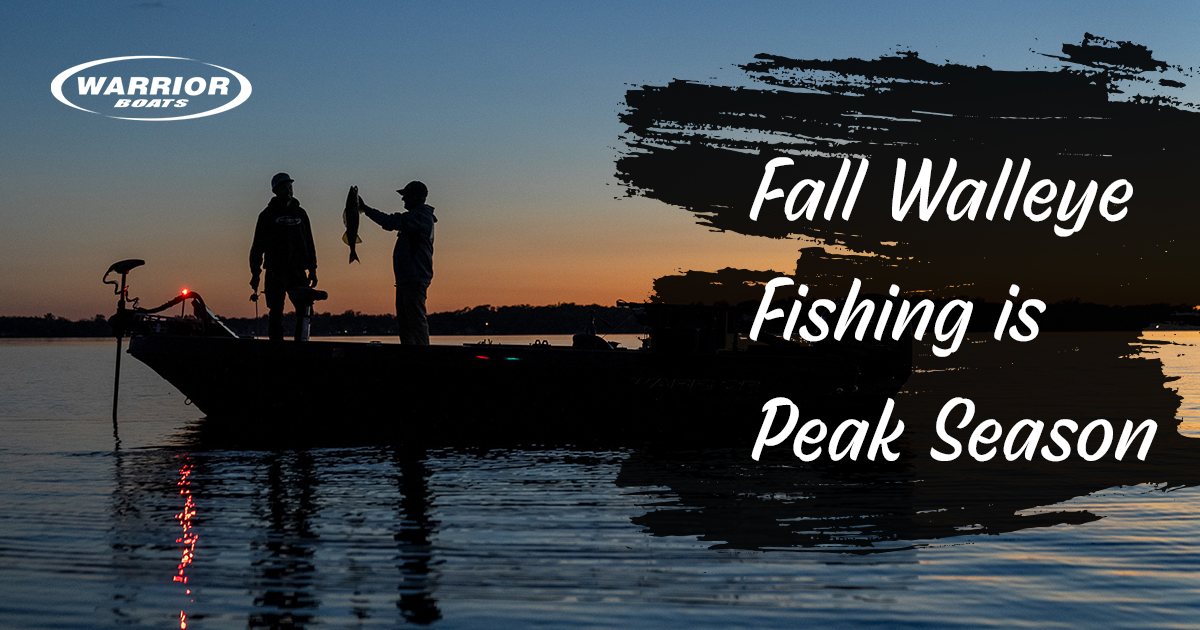
Most anglers put their rods away when the leaves start changing colors. Big mistake. I’m here to tell you that fall walleye fishing from Minnesota to the Dakotas is hands down the best fishing you’ll get all year. The water temps are perfect, the fish are feeding like crazy, and you’ve got the lake practically to yourself. While everyone else is watching football, you could be loading the cooler with some of the fattest walleyes of the season. The bite window gets shorter as days shrink, sure, but when those fish turn on, it’s absolutely lights out. I’ve had October days that made my best summer trips look like practice runs. If you fish the Midwest and you’re not targeting fall walleye, you’re missing out on something special.
The science behind fall walleye behavior
Here’s what’s happening under the water that makes fall so special. Walleyes know winter is coming, and they need to pack on serious weight. They’re building up fat reserves to survive the cold months, and they’re also getting ready for the spring spawn. A fat walleye in fall is a hungry walleye. The magic happens when water temps drop into that 55 to 65 degree range. That’s the sweet spot. The fish are comfortable, active, and looking to eat.
Then you’ve got lake turnover. Don’t let that term scare you. Turnover is when the warm surface water and cold deep water mix together. It brings oxygen and nutrients back into the whole lake. Before turnover, fish are stuck in certain zones. After turnover, they can roam anywhere, and they do. This mixing also stirs up baitfish and gets the whole food chain moving.
Speaking of baitfish, fall is when they lose their hiding spots. Summer weeds die back and thin out. All those shad, shiners, and perch that were hiding in the vegetation suddenly have nowhere to go. They bunch up on structure, and walleyes know exactly where to find them. It’s like ringing the dinner bell.
Here’s another bonus that surprises people. Cold fronts actually help you in fall. In summer, a cold front shuts down the bite for days. In fall, it’s the opposite. Those cooling temps and changing conditions trigger walleyes to feed harder. And let’s not forget the best part. Once the Labor Day crowd packs up their boats, you’ve got prime spots all to yourself. Less fishing pressure means more aggressive fish.
Prime fall locations across Minnesota, Wisconsin, and the Dakotas
Let me walk you through some killer spots across the region. In Minnesota, Mille Lacs is legendary for fall walleyes. Focus on the mud flats in 20 to 30 feet of water, especially on the east side. Those rock bars on the north and south ends also stack up fish. You’ll want to work depths between 18 and 35 feet depending on conditions. Leech Lake is another gem. Walker Bay has drop-offs that hold tons of fish, and Huddle’s Reef near the Agency Bay area is a must-fish spot. Look for that 15 to 25 foot range on the edges.
Over in Wisconsin, Green Bay is absolutely loaded in fall. The rock reefs scattered throughout the bay concentrate baitfish and walleyes. Work the mud flats in 20 to 30 feet, same as Mille Lacs. The Mississippi River system is different but just as good. Target wing dams in Pools 4, 8, and 10. These current breaks stack up walleyes like cordwood. Fish the downstream side in 8 to 15 feet.
Out in the Dakotas, you’ve got some true giants swimming around. Lake Sakakawea is massive, but start with the Van Hook Arm. Fish the points where shallow flats drop into deeper water, usually 15 to 30 feet. Lake Oahe is special because of the cisco population. These big baitfish are walleye candy. Focus on tributary mouths where feeder rivers meet the old river channel. The depth transitions from 20 to 40 feet in these areas hold some serious fish.
Proven fall walleye techniques
Backtrolling is my go-to technique for fall. You’re using your main motor or kicker to slowly back the boat into the wind while working the bottom. This gives you perfect boat control and keeps your bait in the strike zone longer. Use bottom bouncers with spinner rigs or live bait. Speeds should be slow, around 0.5 to 0.8 mph. Way slower than summer.
Jigging changes in fall too. You’re using heavier jigs, usually 3/8 to 1/2 ounce compared to summer’s 1/4 ounce. The presentations are slower and more methodical. Snap it up, let it fall, pause. Fall walleyes want to see that jig sitting still on bottom. Tip with a minnow instead of a leech once water temps drop below 55 degrees.
Trolling crankbaits is deadly effective in fall. The Rapala Deep Husky Jerk is a staple, along with deeper running cranks that hit that 15 to 25 foot zone. Troll at 1.5 to 2.0 mph, which is faster than jigging but still controlled.
Use planer boards to cover more water and find active schools.
Here’s where technology helps. Vertical jigging with forward-facing sonar, what the pros call sharpshooting, has changed the game. Tom Boley is the master at this. You use sonar like Humminbird MEGA Live to actually watch fish react to your jig in real time. You can see a walleye 50 feet away, cast to it, and watch it eat your bait on the screen. It’s like fishing in an aquarium. Drop your jig straight down on marked fish and work it right in their face.
Don’t forget slip bobbers. They’re perfect for fishing rock piles and irregular bottom where bottom bouncers hang up. Set your depth to keep the bait just off bottom, usually 1 to 2 feet up. Slip bobbers also let you fish ultra-slow, which fall walleyes love.
Why your boat choice matters in fall
Fall conditions are no joke. The wind picks up, waves get bigger, temperatures drop, and you’re dealing with rough water more days than not. This is when your boat really matters. You need a deep-V hull that can cut through waves instead of pounding you to death. Stability becomes critical when you’re trying to work a jig in three foot rollers.
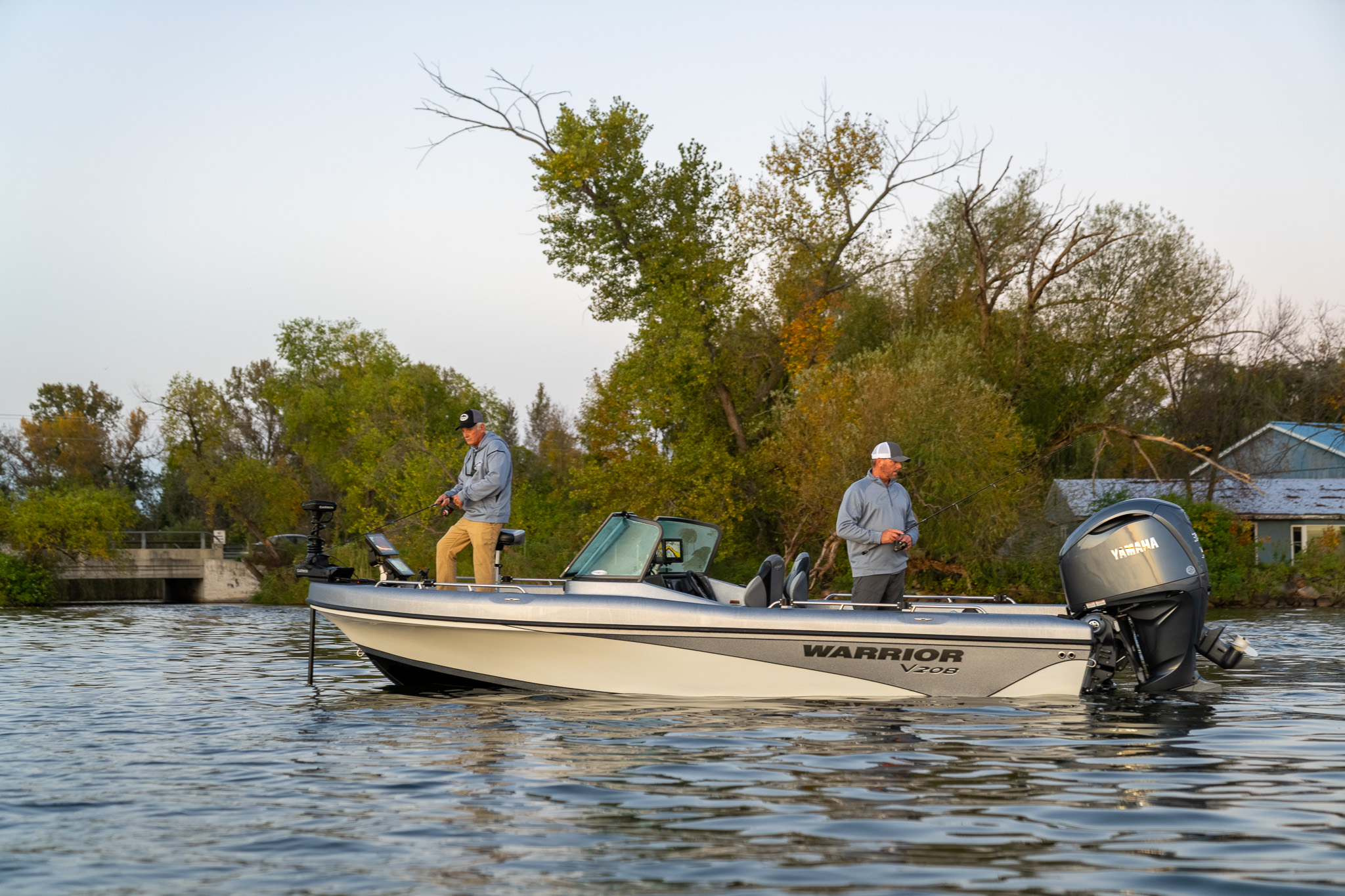
This is exactly why boats like the Warrior V208 Dual Console shine in fall. At 20 feet 4 inches, it’s big enough to handle nasty water but still maneuverable for fishing. That dual console design is a game changer. It breaks the wind and keeps you dry when running between spots. You also get true 360-degree fishability. You can work every side of the boat comfortably, which matters when you’re backtrolling or positioning on structure.
The V208 handles up to 350 horsepower. That’s not about going fast. It’s about having the power to control your boat in rough conditions. When you’re fighting a 25 mph northwest wind, you need that power to hold position and make your trolling passes. The 62-gallon fuel tank means you can make long runs to prime spots without worrying about range. Fall fishing often means traveling to find active fish.
Stability for working jigs in waves is huge. The V208’s wide beam and solid construction keeps you planted when you’re standing and jigging. No wobbling around when you’re trying to feel that subtle tick. The boat has space for all your fall techniques too. Rod storage holds multiple setups so you can switch between jigging, trolling, and rigging without retying. Electronics space lets you mount that forward-facing sonar plus traditional graphs.
The boat’s described as the best multi-species platform on the market, and that rings true for fall walleye fishing. You’ve got livewell space, casting decks, and comfortable seating for those long cold days. When you’re dealing with 40-degree mornings and rough water, having the right boat makes the difference between catching fish and just surviving.
Make this fall your best walleye season yet
You now know the secret that keeps guides busy through October and November. Fall walleye fishing in the Midwest is the best opportunity you’ll get all year to load up on big, fat, aggressive fish. The conditions are perfect, the fish are feeding hard, and the crowds are gone. Whether you’re jigging rock piles on Mille Lacs, backtrolling wing dams on the Mississippi, or trolling cranks on Oahe, fall delivers. Get out there and take advantage before ice-up. The walleyes are waiting, and they’re hungry. Visit your local Warrior dealer to check out the V208 and see why serious walleye anglers trust this boat when conditions get tough and the fishing gets good.