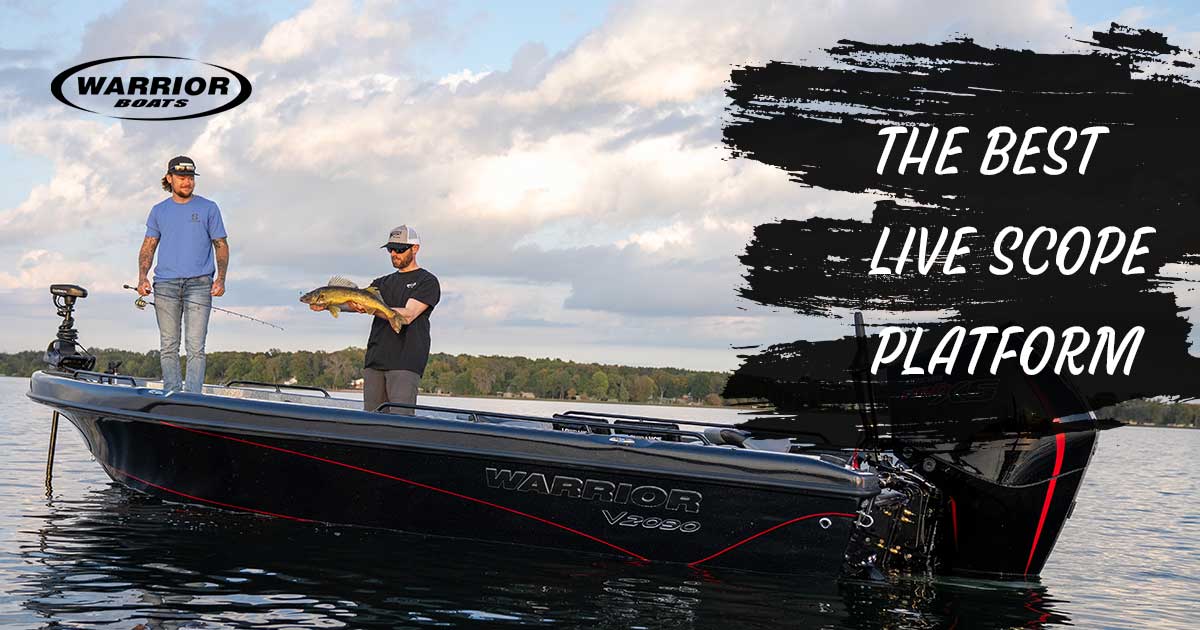
If you’ve been walleye fishing in the last five years, you’ve watched the game change. Forward-facing sonar has gone from a curiosity to the norm, and whether you love it or hate it, one thing is clear: live scoping isn’t going anywhere. What started as a bass fishing tool has completely changed how we chase walleyes, and if you’re serious about it, you need a boat that’s built for it.
The Warrior 2090 wasn’t designed specifically for live scope because the technology didn’t exist when we started building this model. But here’s the thing: when you build a serious fishing platform from the ground up, with input from guys who actually fish, you end up with a boat that works perfectly for whatever comes next. That’s exactly what happened with the V2090.
What Live Scoping Actually Means
Let’s back up for a second. If you’re new to this technology, forward-facing sonar (brands like Garmin LiveScope, Lowrance ActiveTarget, or Humminbird MEGA Live) is fundamentally different from the down imaging and side imaging we’ve used for years. Instead of looking at what’s below or beside your boat, these units let you see what’s in front of you in real time.
You’re watching fish move. You’re watching your jig drop. You’re seeing a walleye approach your bait, follow it, and either eat it or turn away. It’s like having underwater eyes that reach out 100 feet or more in any direction you point them.
The difference between traditional sonar and live scope is like the difference between looking at a photo and watching a video. Traditional units show you where fish were when the signal passed under your boat. Forward-facing sonar shows you where fish are right now and what they’re doing about it.
How It Changed Everything
This technology has completely changed the way we approach walleye fishing. Before live scope, you’d mark fish on traditional sonar, drop a jig, and hope you were in the right spot. You’d make educated guesses about how fish were relating to structure. You’d rely on feel and experience to know if your presentation was right.
Now you can watch it all happen. You see fish relating to a specific depth on a break. You watch them suspend over the basin. You see them chase your bait and you can adjust your cadence instantly based on how they react. If they’re not biting, you know immediately whether it’s because they’re not there or because they don’t like what you’re showing them.
Tournament guys figured this out first. The learning curve for new water got cut in half when you could actually see what fish were doing. Techniques like vertical jigging and precise casting became more effective because you had instant feedback. You weren’t fishing blind anymore.
But it’s not just for tournament anglers. Recreational fishermen using live scope are catching more fish and understanding walleye behavior better than they ever could before. The technology levels the playing field between someone who’s fished a lake for 30 years and someone fishing it for the first time.
What Makes a Boat Good for Scoping
Here’s where most people don’t think things through. Live scope changed what matters in a fishing boat. If you’re spending hours watching a screen while making precision casts or working a jig vertically, your boat needs to do things it didn’t need to do before.
First, you need a stable platform. When you’re watching fish on a graph, the boat can’t be rocking and rolling. You need to see subtle movements, and you need to make accurate casts to specific fish. A rough ride doesn’t just make you uncomfortable anymore. It makes the whole system less effective.
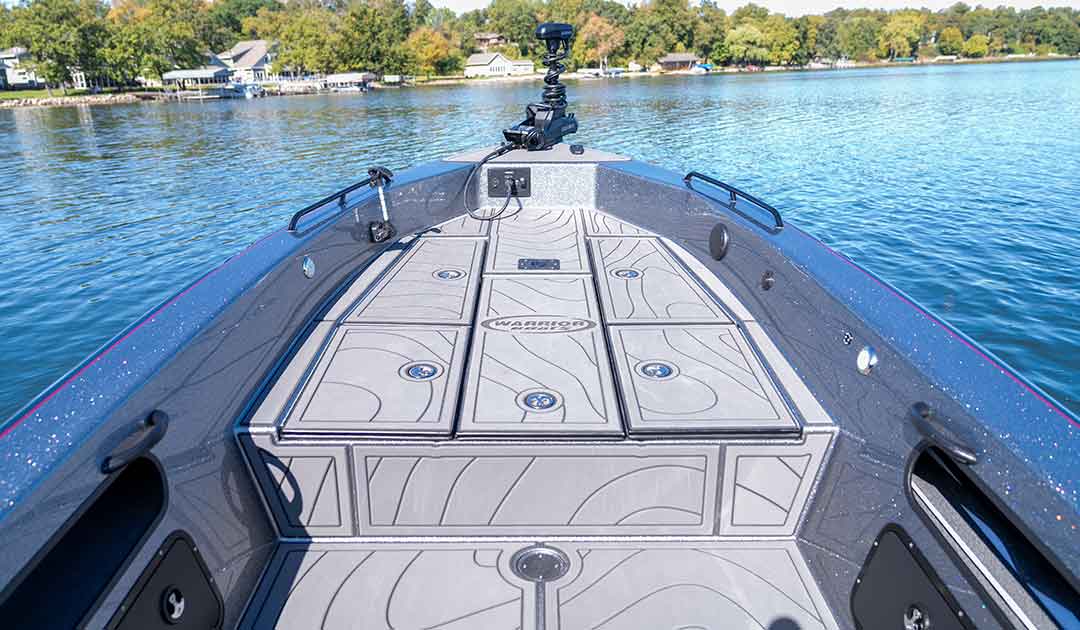
Your bow layout matters more than ever. You need clean space for mounting multiple transducers because serious scopers run more than one unit. You need those screens positioned where you can see them while casting or jigging. The days of a cluttered bow with gear everywhere are over if you want to scope effectively.
You need room to move. Live scoping is active fishing. You’re constantly adjusting position, switching angles, moving around the boat to get better looks at fish. A cramped deck doesn’t cut it.
And you need smooth water performance. Rough water capability isn’t just about getting to the fishing spot anymore. It’s about being able to stay on fish and keep your screens readable when the wind picks up. The Great Lakes and big water walleye fishing means dealing with conditions that would make most boats pack it in.
Why the 2090 Works Perfectly
The 2090 sits in a sweet spot that most boats miss. At 20 feet 5 inches, it’s big enough to handle serious water but still nimble enough to work effectively on smaller lakes and rivers. That 102-inch beam provides the stable casting platform you need for watching screens and making precision presentations.
The deep-V hull design that Warrior is known for does double duty here. Obviously, it cuts through rough water better than a modified-V or flat bottom boat. But it also provides a more stable platform when you’re sitting still. The boat doesn’t wallow in the waves. It stays put when you need it to, which matters when you’re trying to keep a transducer pointed at a specific piece of structure.
The bow layout on the 2090 is clean and functional. There’s space to mount multiple live scope transducers without things getting crowded. The deck height and gunwale design let you position screens where you can actually see them. You’re not craning your neck or squinting at odd angles.
Rod storage is thoughtful. The in-floor lockers keep your deck clear, which matters when you’re moving around to work different angles. You can have rods rigged and ready without them being underfoot.
The seating configuration works for scoping because you can run the boat and watch your screens from the console, then move to the bow when you’re on fish. The layout flows naturally for how people actually fish with this technology.
Power options on the 2090 support running the kind of electronics package serious scopers use. Multiple graphs, multiple transducers, networking between units. The electrical system can handle it without compromise.
And storage throughout the boat means you’ve got room for backup units, extra transducers, and all the other gear that comes with running premium electronics. Because if you’re investing in live scope technology, you’re probably not cutting corners on the rest of your setup either.
The Bottom Line
Live scoping changed walleye fishing whether we were ready for it or not. The technology isn’t perfect and it’s not for everyone, but it’s here to stay. If you’re going to use it seriously, you need a boat that supports it instead of fighting against it.
The 2090 works because it was built by fishermen who understand what actually matters on the water. The same qualities that make it a great rough water walleye boat make it an outstanding platform for live scope fishing. Stability, space, smart layout, and the ability to handle real fishing conditions.
If you want to see how a 2090 handles, find your nearest Warrior dealer or catch us at an upcoming boat show. There’s a difference between a boat that can mount electronics and a boat that’s actually built to fish with them. You’ll see it the first time you step in one.